Argan oil holds a special place in Moroccan culture. For generations, local communities in southern Morocco have produced this precious oil using traditional techniques. Today, visitors can discover this heritage through hands-on argan oil-making workshops.
During these experiences, you can learn about the argan tree, explore traditional production methods and discover the difference between culinary and cosmetic argan oil. Most importantly, you can connect with local traditions and the people who keep them alive.
Argan oil comes from the kernels of the argan tree, which grows mainly in southwestern Morocco. This unique tree thrives in a semi-arid environment and plays an important role in the region’s natural and cultural heritage.
Local communities use argan oil in several ways. For example, culinary argan oil adds a distinctive nutty flavour to traditional Moroccan dishes. Meanwhile, cosmetic argan oil features in many skincare and haircare routines.
Beyond its everyday uses, argan oil represents generations of local knowledge. Therefore, discovering how people produce it offers a deeper understanding of Moroccan traditions and rural life.
Traditional argan oil production involves several steps. Each one requires patience, care and practical knowledge.
First, producers collect and prepare the argan fruit. After removing the outer parts, they obtain the hard nuts that contain the valuable kernels.
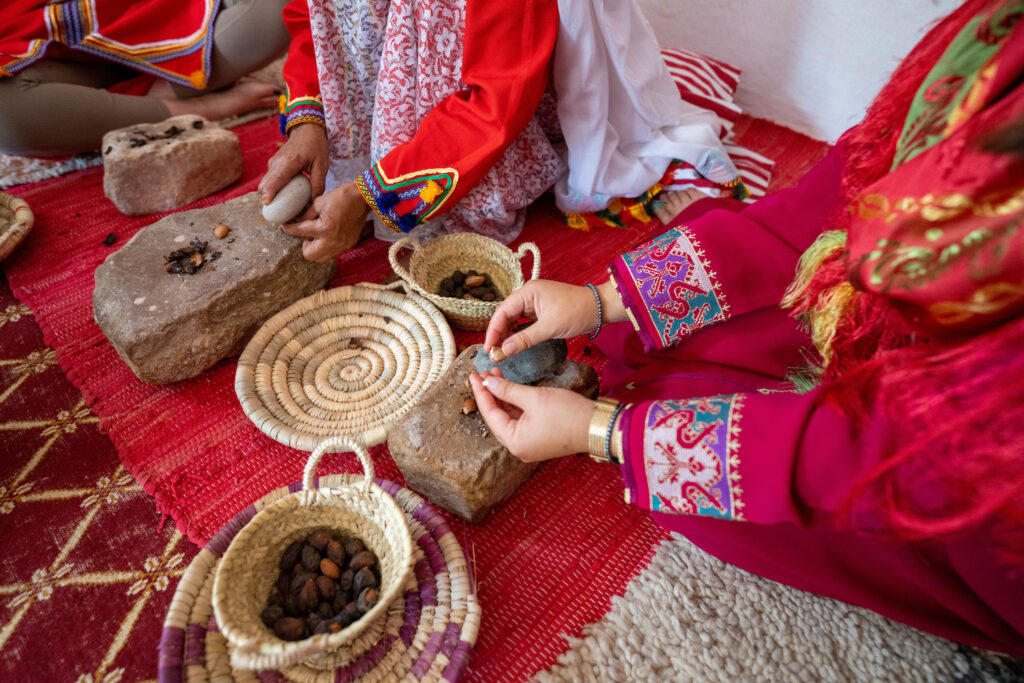
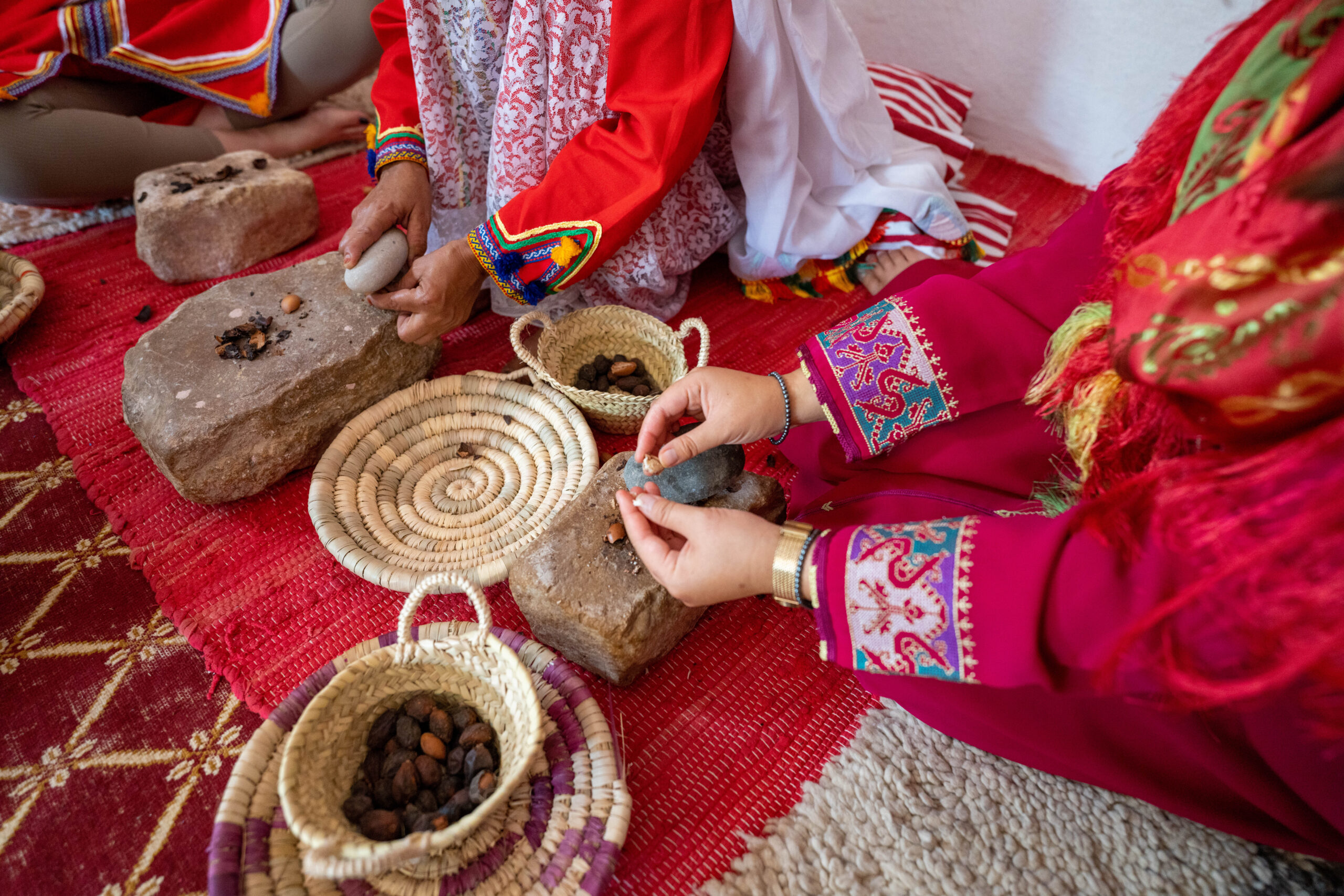
Next, they crack the nuts to extract the kernels by hand. This step requires skill and attention because the kernels must remain intact.
For culinary argan oil, producers gently roast the kernels before grinding them. This process gives the oil its characteristic nutty aroma and rich flavour.
In contrast, producers generally leave the kernels unroasted when making cosmetic argan oil. As a result, the two types of oil have different characteristics and uses.
Traditionally, producers grind the kernels using a stone mill or another manual tool. They then work the ground kernels to extract the oil.
Depending on the method, this process may involve adding water and kneading the mixture by hand. Although modern equipment can speed up production, traditional methods offer valuable insight into the knowledge behind this craft.
Although both oils come from the same tree, their production methods differ.
Culinary argan oil uses roasted kernels, which give it a warm colour and a distinctive nutty taste. People often enjoy it with bread, couscous, salads and other Moroccan dishes.
Cosmetic argan oil, on the other hand, generally comes from unroasted kernels. Producers extract it without the roasting step to preserve its qualities for cosmetic use.
During an argan oil-making workshop, you can learn more about these differences. Some experiences also allow you to choose which type of oil to make, depending on the techniques and activities available.
Reading about argan oil is one thing; discovering its production firsthand is another.
During a traditional workshop, local hosts introduce you to the different stages of oil making. You can handle the tools, learn how producers prepare the kernels and try some of the techniques yourself.
Moreover, these workshops offer an opportunity to exchange knowledge with local people. They help visitors understand the time, patience and experience that traditional production requires.
Some experiences also include a small bottle of the oil you make yourself. In addition, you may enjoy a tea break featuring local products, making the workshop a welcoming introduction to the region’s food culture.
As a result, you leave with more than a souvenir. You gain a better understanding of an important Moroccan tradition.
Women have long played an important role in preserving traditional argan oil production. Through their knowledge and practical skills, many women have helped pass these techniques down through generations.
Today, women’s cooperatives and local producers continue to share this heritage with visitors. Their work also creates opportunities to support local livelihoods and promote traditional know-how.
By taking part in an argan oil-making workshop, visitors can discover the human stories behind the product. At the same time, they gain a greater appreciation for the people who maintain these traditions.
The Souss-Massa region offers an excellent setting to discover argan oil and its cultural significance. Here, the argan tree forms part of the landscape and supports local activities linked to traditional knowledge.
Beyond the region’s coastal attractions, visitors can explore rural areas, meet local producers and discover the traditions behind everyday Moroccan products.
For travellers looking for authentic experiences near Agadir, an argan oil-making workshop offers a meaningful way to explore local culture. Furthermore, it provides a closer look at the relationship between people, nature and traditional craftsmanship.
Argan oil tells a story of nature, knowledge and cultural heritage. From preparing the kernels to extracting the oil, every stage reveals the skill and patience behind this traditional craft.
Whether you want to explore Moroccan food culture, discover local traditions or try a hands-on activity, an argan oil-making workshop offers a memorable experience.
Ready to discover the art of argan oil making?
Explore traditional argan oil-making experiences in southern Morocco and meet the local people who keep this heritage alive.
Aucun résultat ne correspond à votre recherche