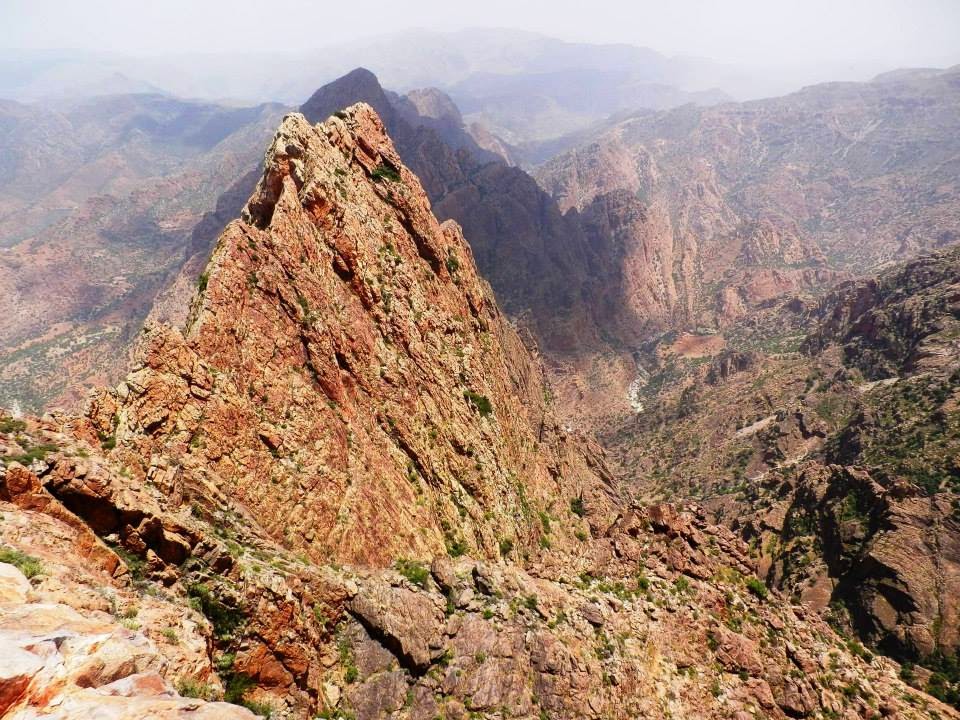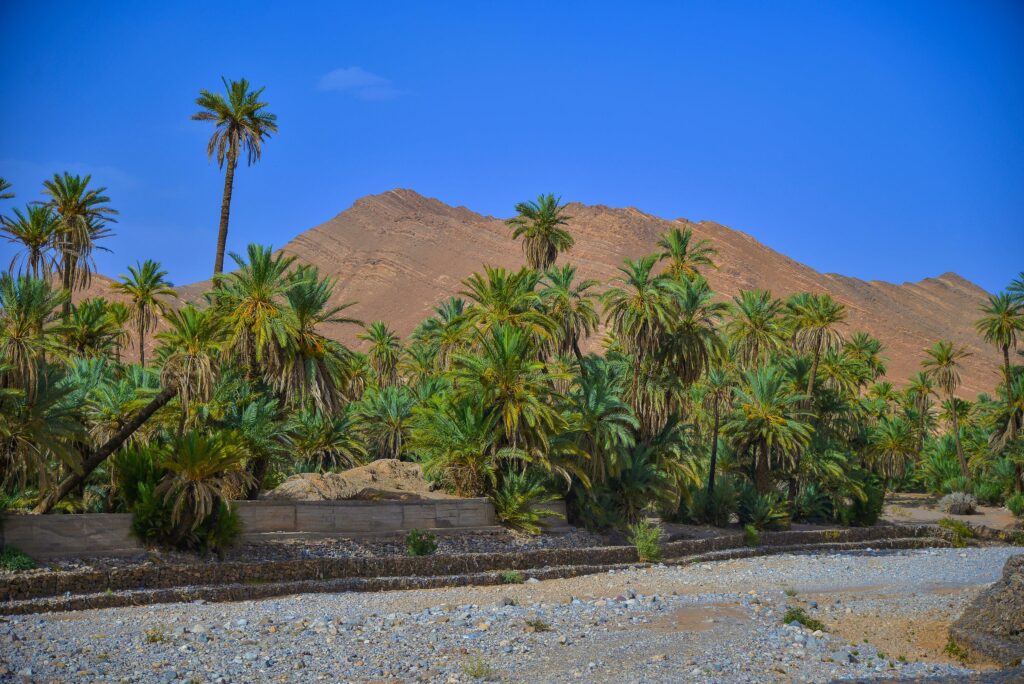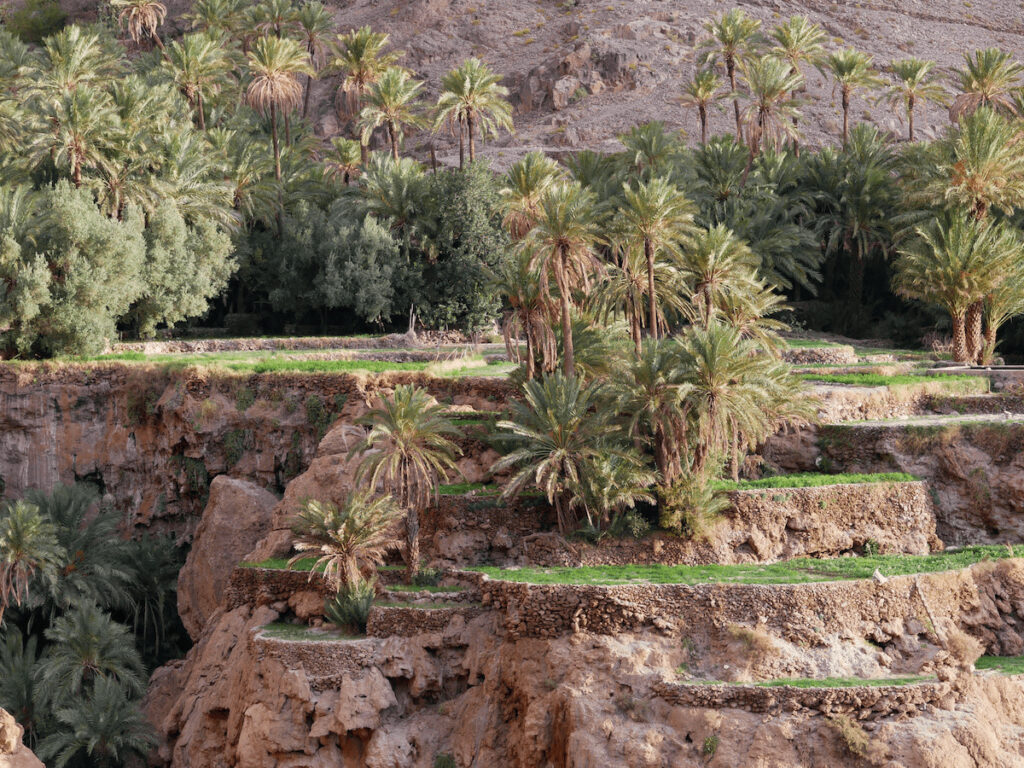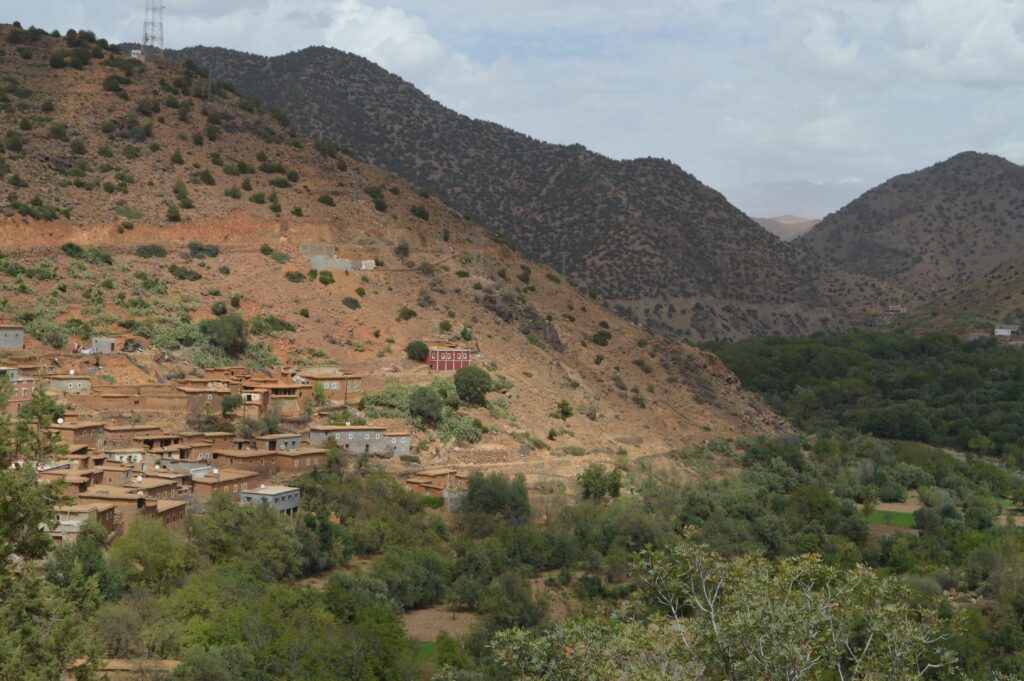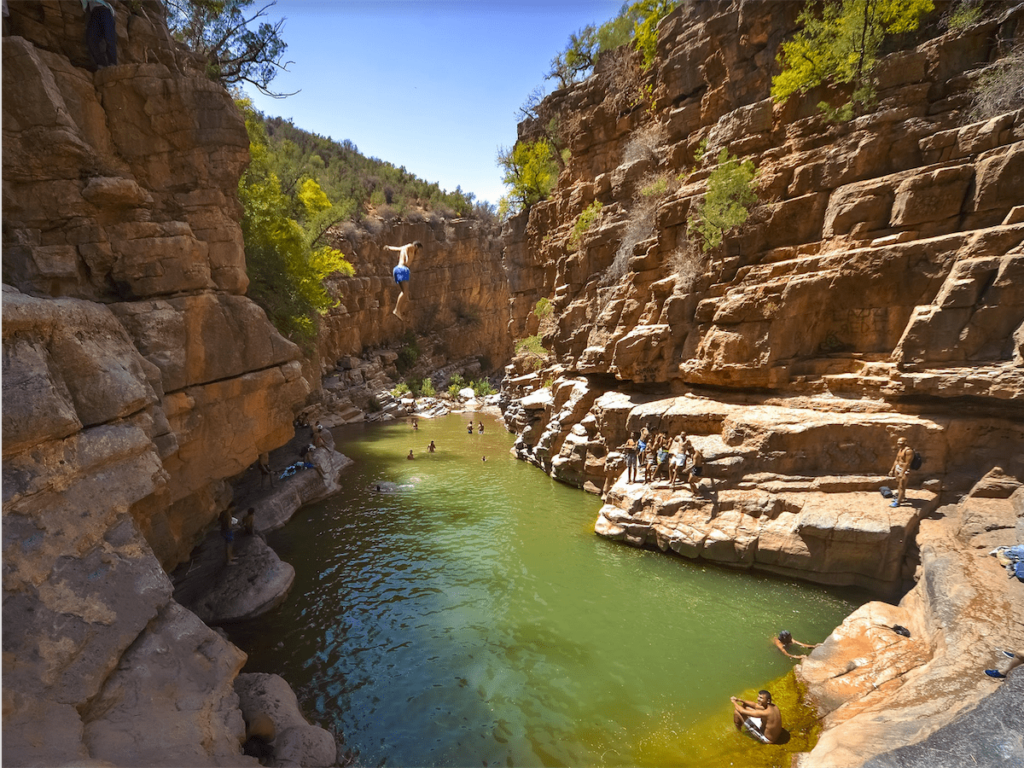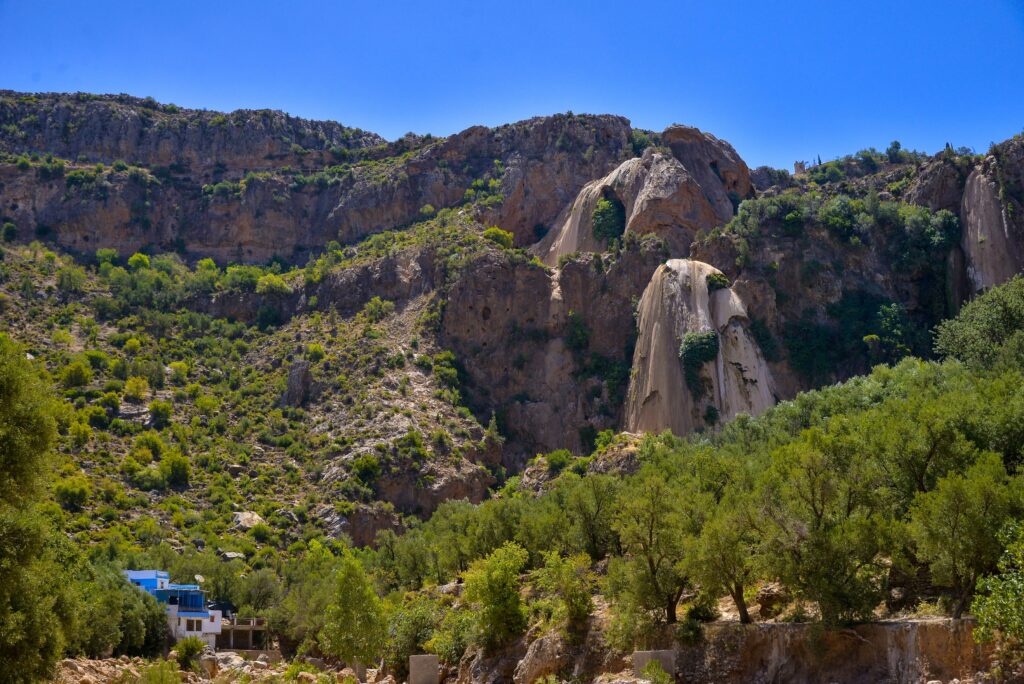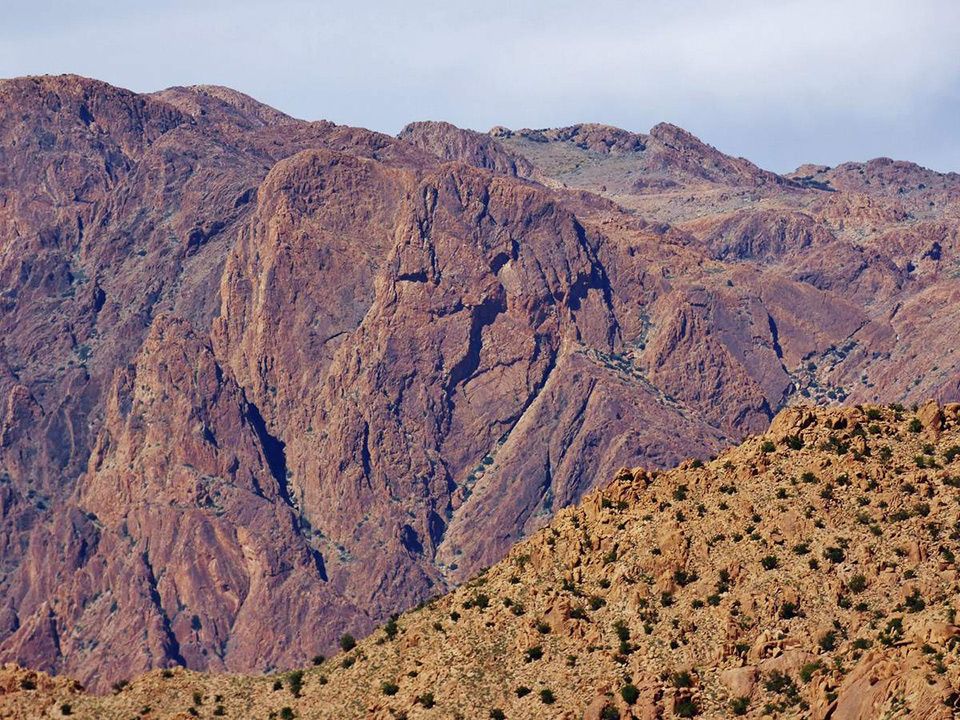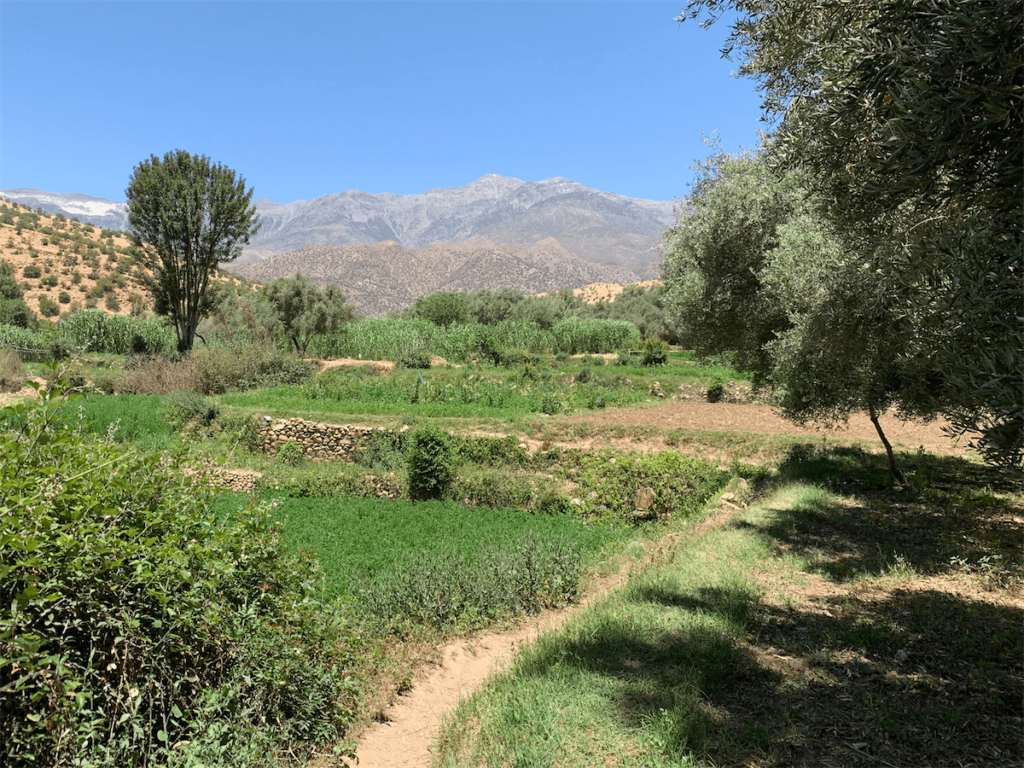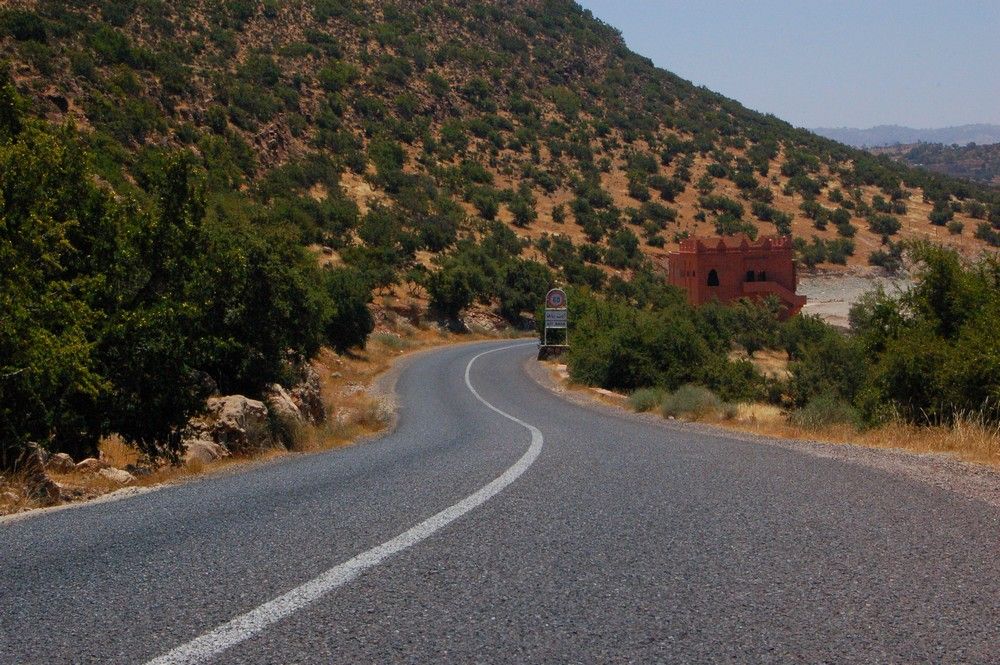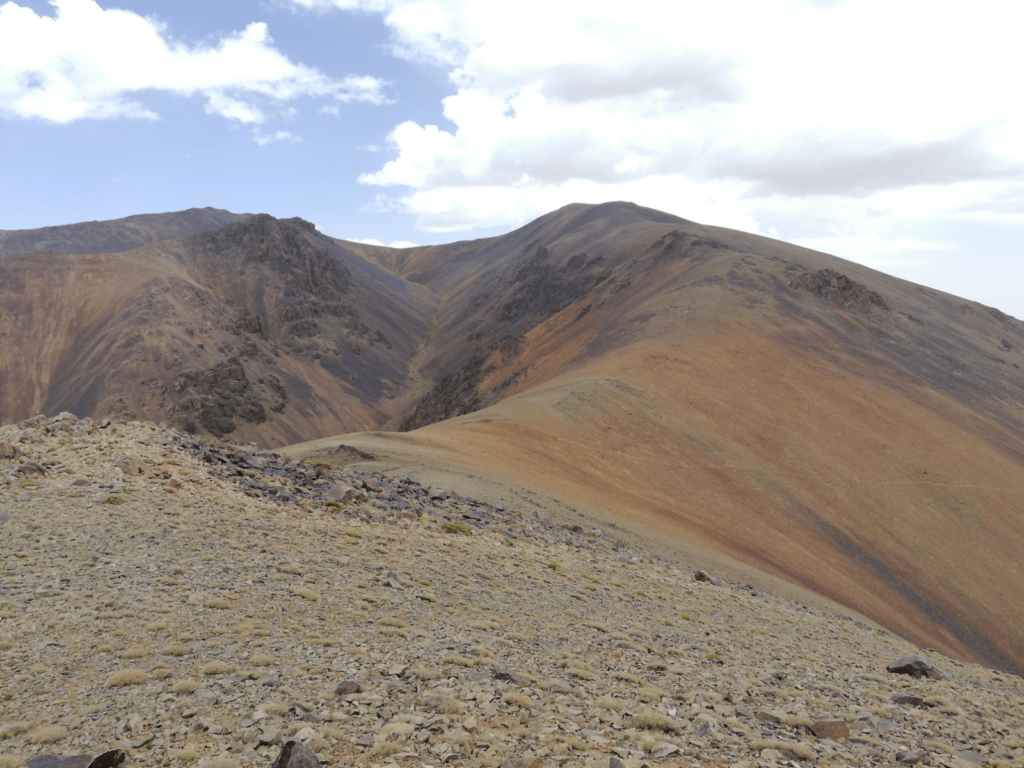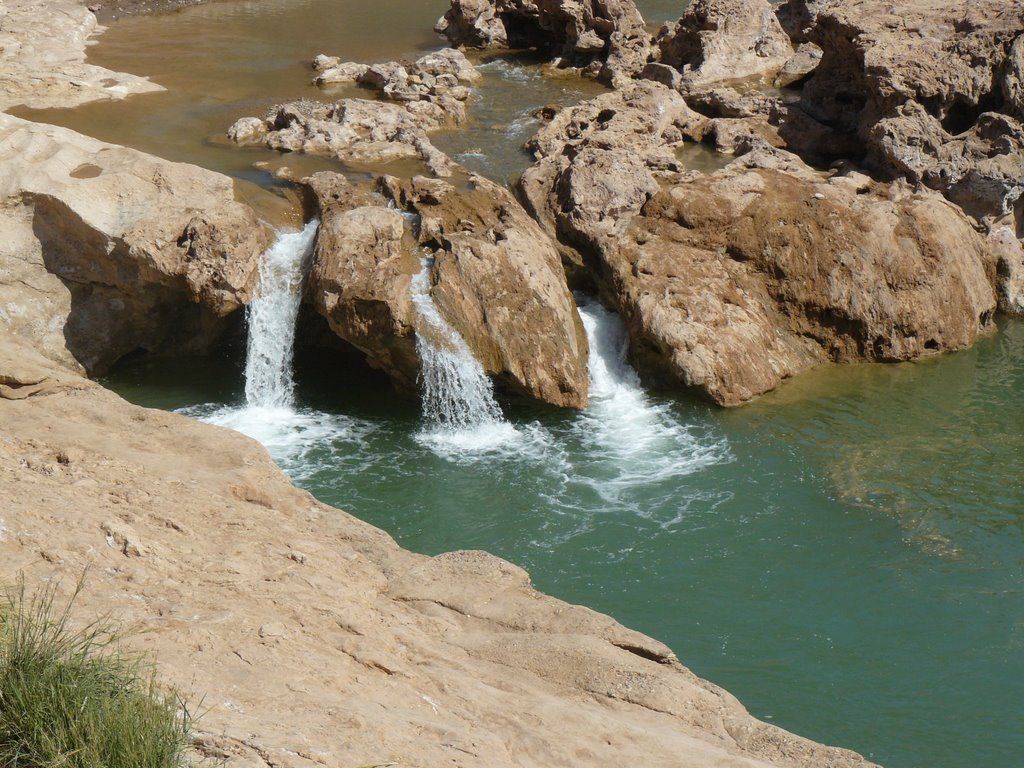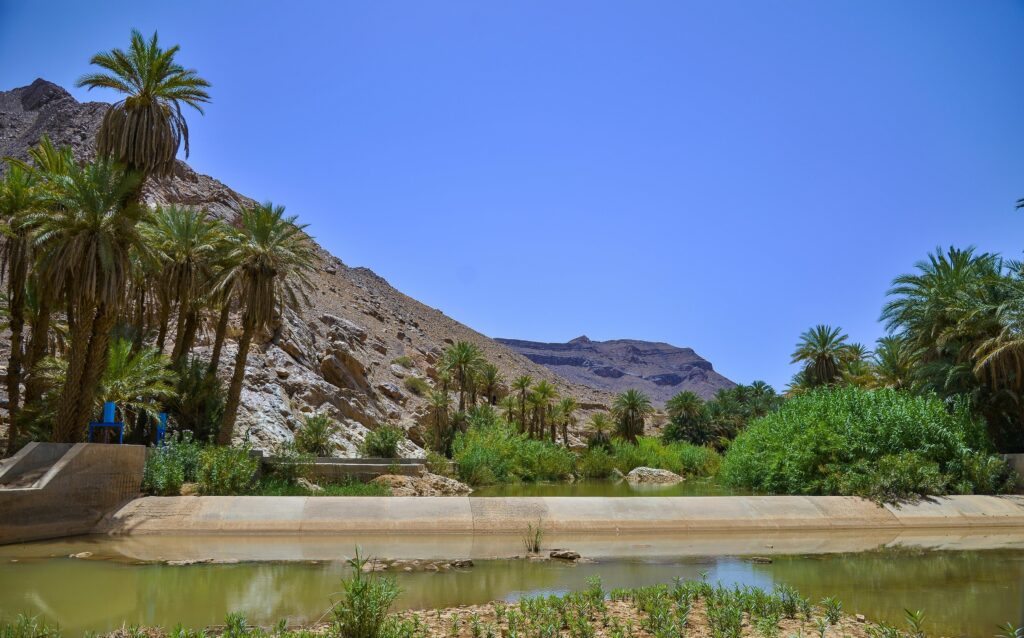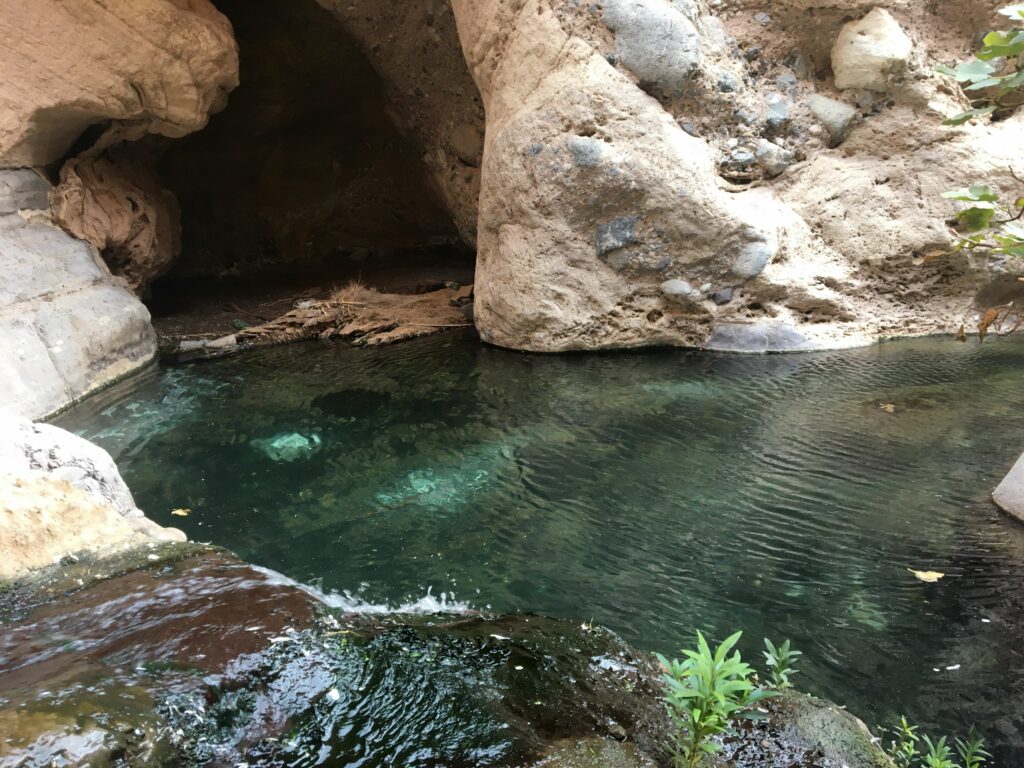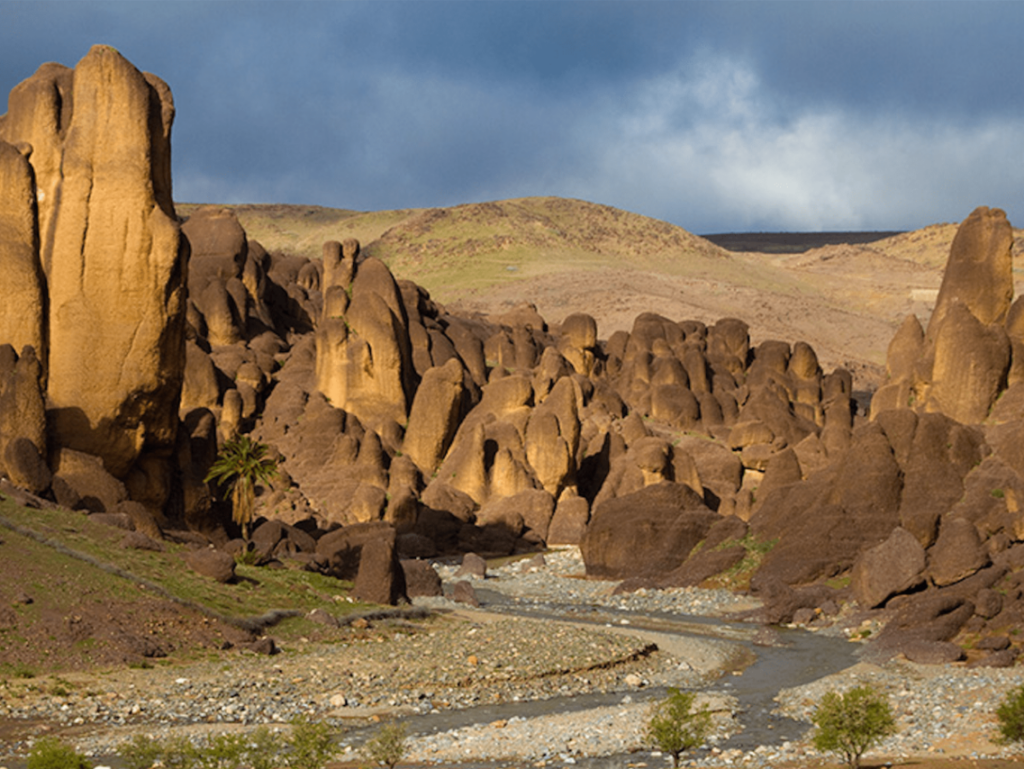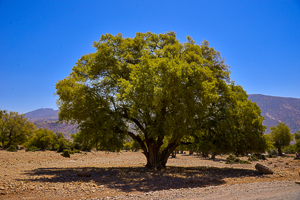
Despite the surrounding desert environment, the oasis creates a continuous green corridor. Palm groves and cultivated areas follow the river’s course, offering a striking contrast to the mineral and dry terrain that dominates the region.
Along Assif Nilt, dense palm groves shelter small agricultural plots where crops grow in carefully managed conditions. Seasonal water flow supports traditional farming practices adapted to limited resources. Moreover, ancestral irrigation systems channel water efficiently across the valley floor.
Traditional earthen architecture lines the oasis, with villages built from local materials such as clay, stone, and palm wood. These structures blend seamlessly into the landscape and respond naturally to the climate, providing shade and insulation while respecting the environment.
Exploring Assif Nilt offers an immersive experience rooted in calm and continuity. Walking through the oasis reveals shaded paths, cultivated fields, and quiet village spaces. At the same time, the surrounding desert landscapes remain visible, reinforcing the contrast between greenery and aridity.
Rather than offering fast-paced activities, the valley encourages slow exploration. Consequently, visitors experience silence, open space, and a rhythm of life shaped by agriculture, seasons, and community traditions.
Ultimately, Assif Nilt stands as a strong example of Morocco’s oasis heritage. The valley reflects centuries of adaptation to environmental constraints, where water management, agriculture, and settlement remain closely interconnected.
In this sense, Assif Nilt represents rural resilience in its most authentic form. It offers a meaningful insight into how communities continue to live in balance with their environment, preserving knowledge, landscapes, and cultural identity over time.
There are no results matching your search