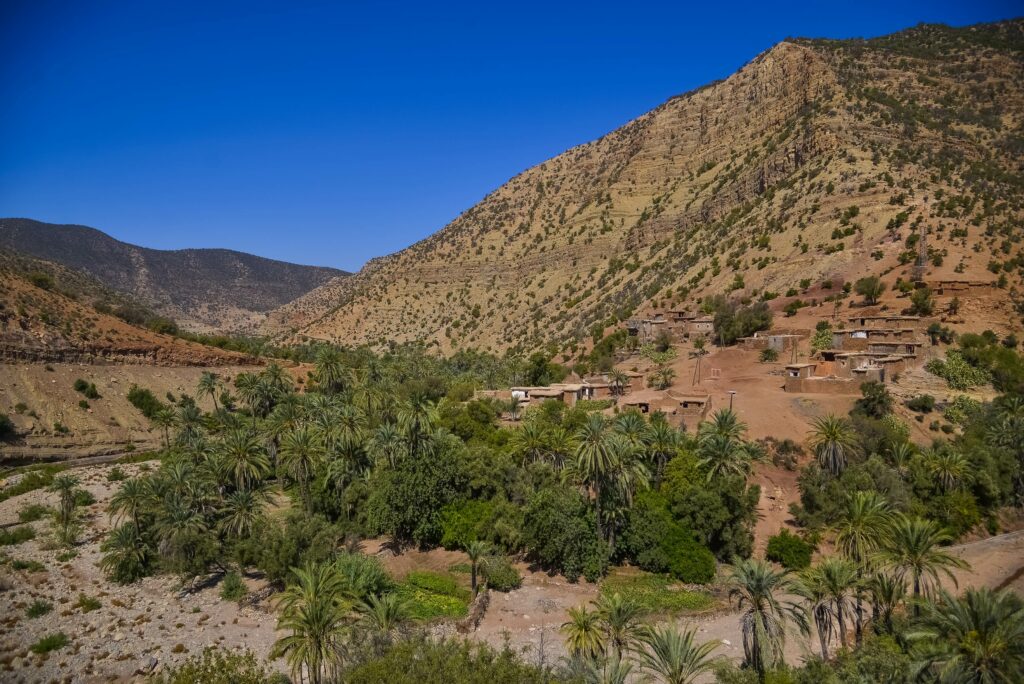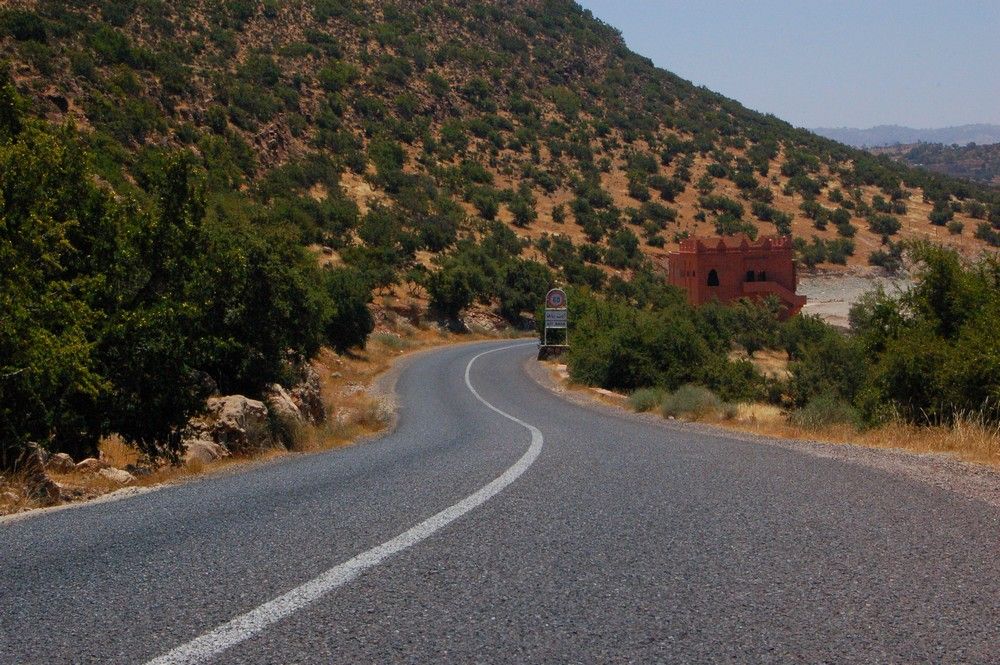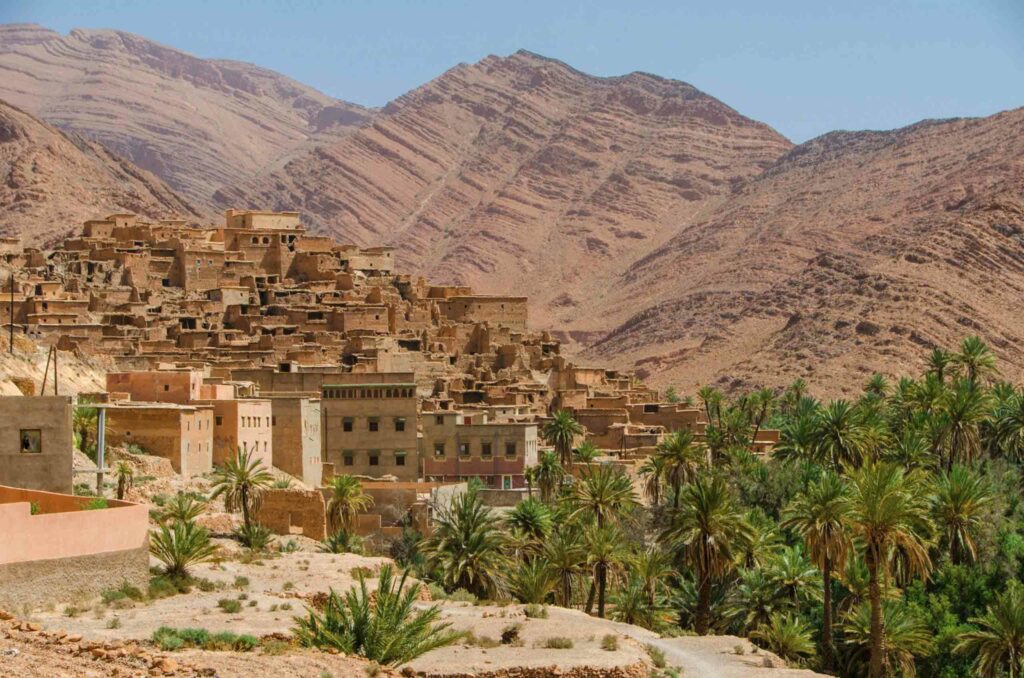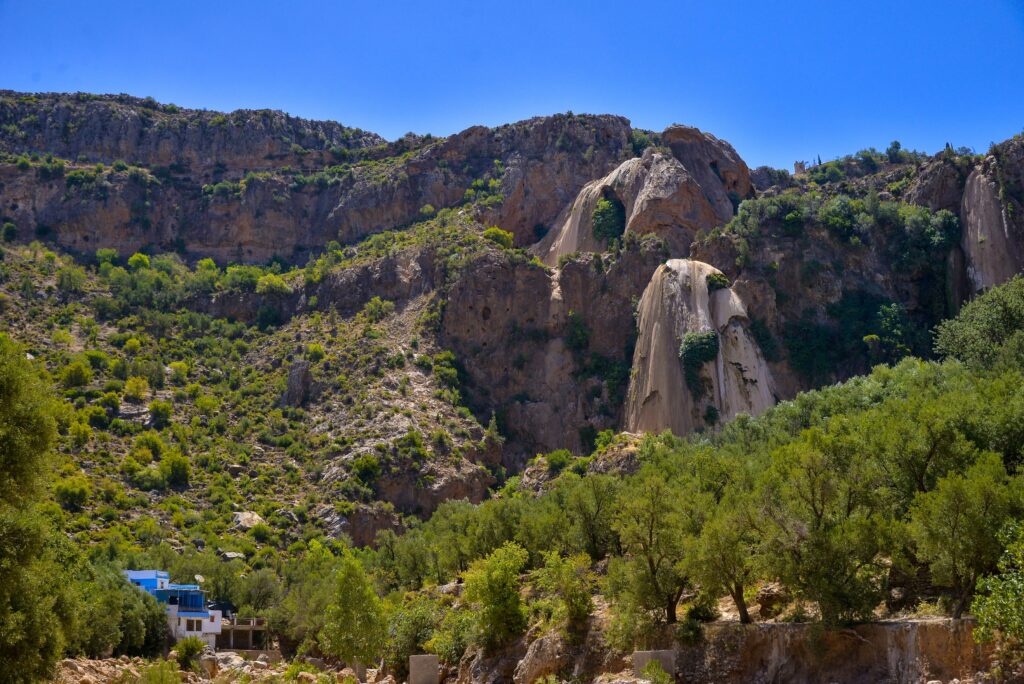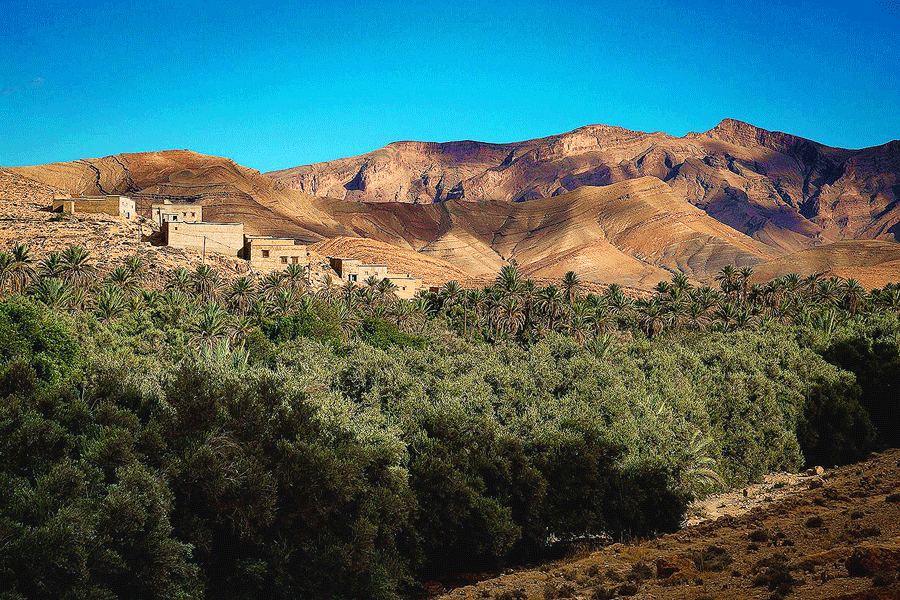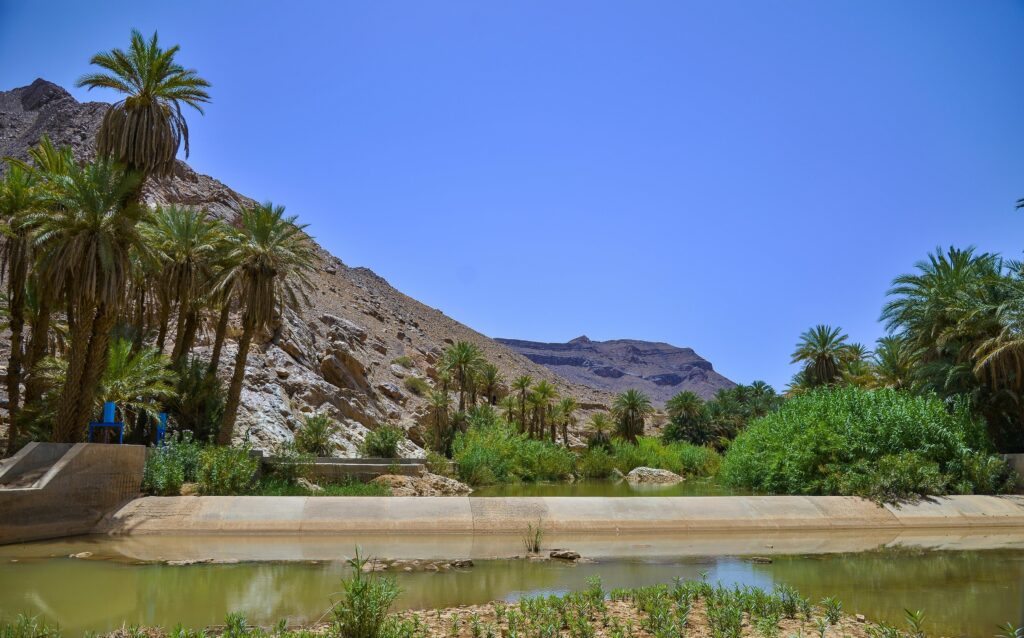
Samazar Valley unfolds as a quiet oasis landscape in southern Morocco, where water, palm groves, and rural life shape the environment. Set against arid and mineral surroundings, the valley offers a striking contrast between fertile land and desert terrain. This contrast gives Samazar Valley its distinctive character and strong sense of place.
As a result, the valley feels both protected and remote. Human settlements remain closely tied to the land, adapting to natural constraints rather than transforming them. The landscape reflects a long history of coexistence between people and their environment.
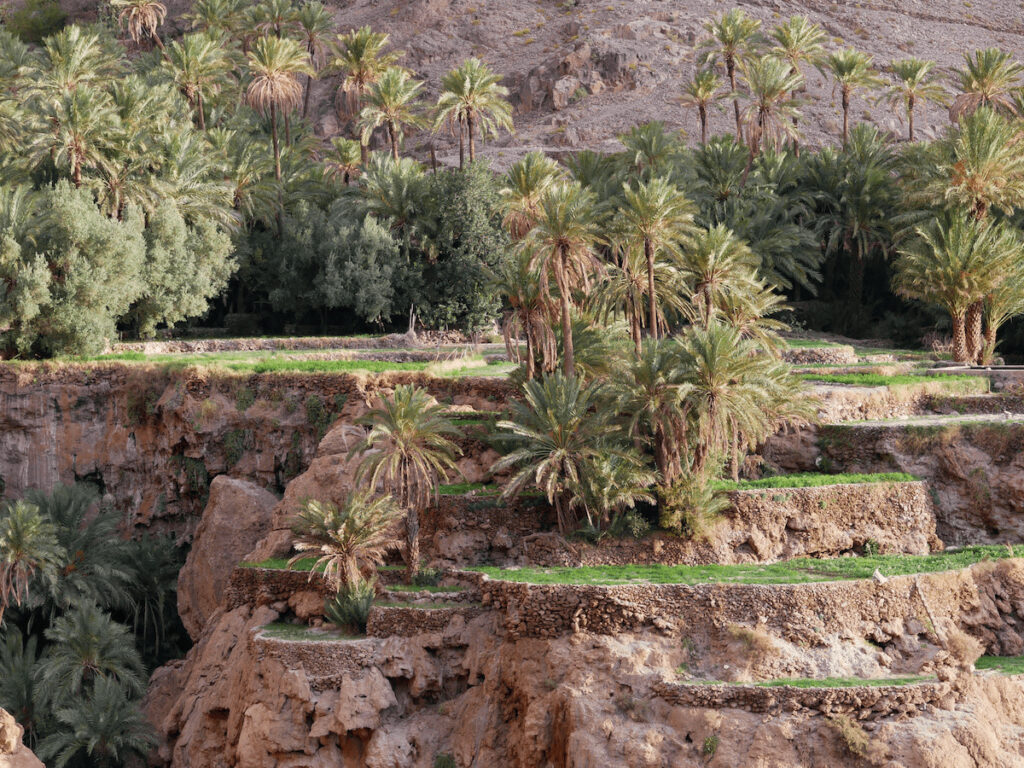
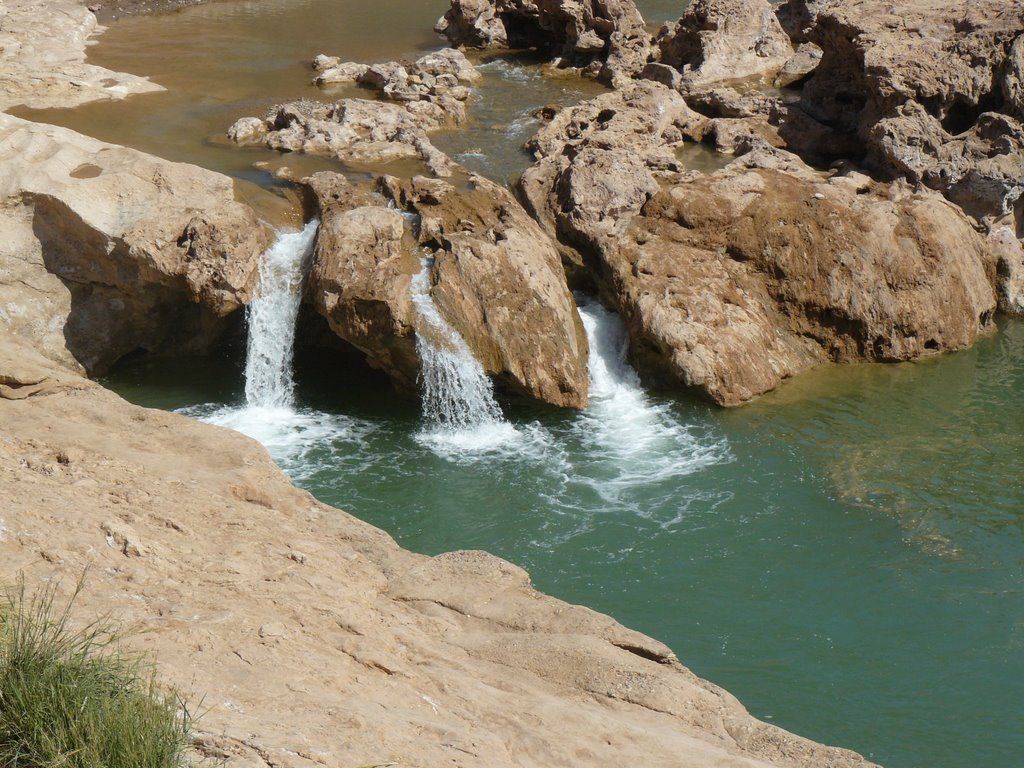
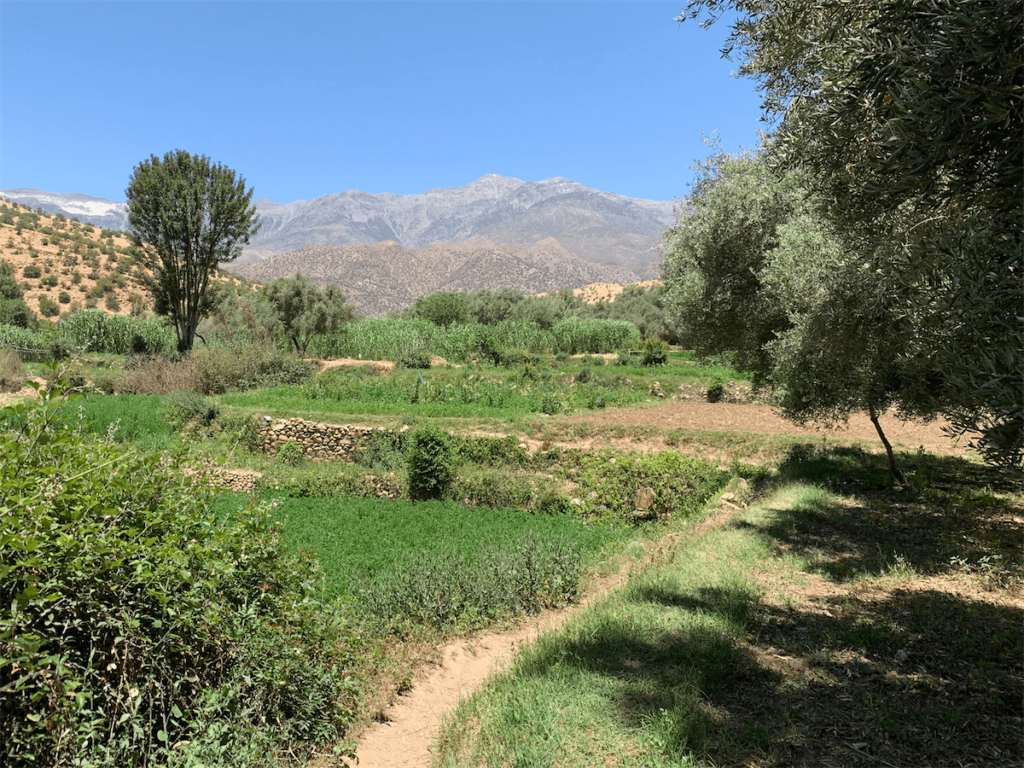
At the heart of Samazar Valley, seasonal water flow sustains palm groves and small cultivated plots. This water allows agriculture to develop in an otherwise dry region. Moreover, traditional terraces carefully structure the land, making efficient use of limited resources.
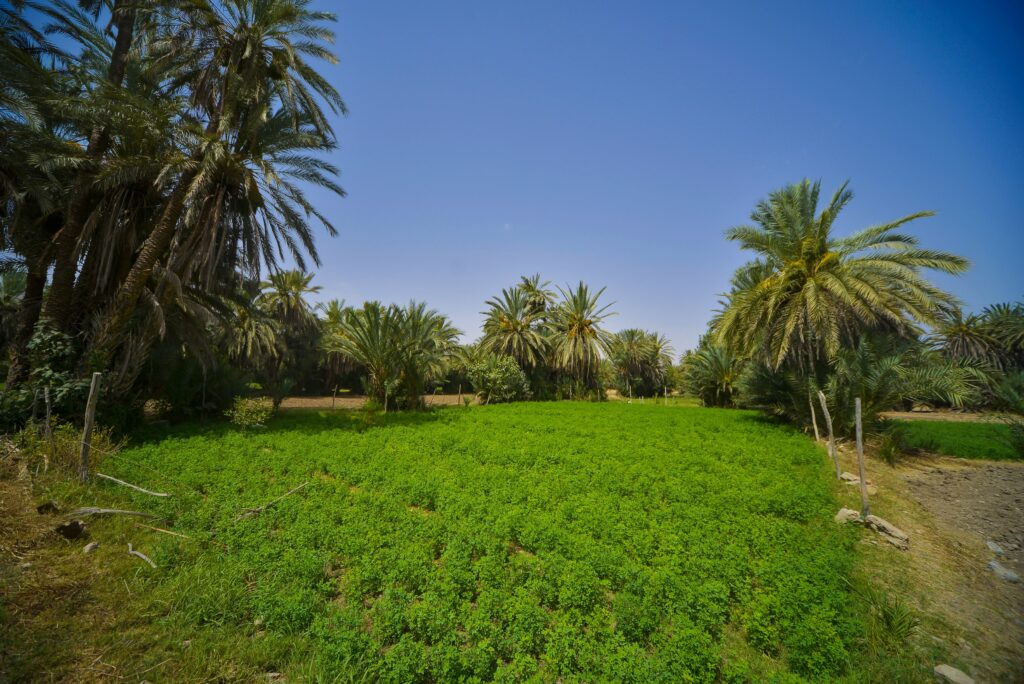
Palm trees dominate the valley floor, while small gardens and fields extend along the watercourse. Stone borders and simple irrigation channels reveal practical knowledge passed down through generations. Together, these elements form a landscape shaped by patience and adaptation.
Exploring Samazar Valley means entering a slower rhythm of life. Walking through the oasis reveals daily agricultural activities, shaded paths, and quiet resting areas beneath palm trees. In this context, movement follows the valley’s natural layout rather than fixed routes.
Rather than offering dramatic landmarks, the valley reveals itself through atmosphere and detail. Consequently, visitors experience a sense of continuity, where time feels measured by seasons, water flow, and agricultural cycles.
Ultimately, Samazar Valley highlights the resilience of oasis communities in southern Morocco. Life here depends on a delicate balance between water availability, cultivated land, and human presence. This balance shapes both the landscape and social organization.
In this sense, the valley stands as a living example of oasis heritage. Samazar Valley offers an authentic insight into rural life shaped by environmental limits, tradition, and collective knowledge.
There are no results matching your search